My breast cancer diagnosis came about unexpectedly, as it often does for many. It began with a routine annual exam, a precautionary step I took as part of my commitment to maintaining my health. Little did I know that this routine screening would lead to a life-changing discovery.
I mentioned to my gynecologist about a drop of milk-like fluid that had developed at the opening of the nipple on my right breast. After completing my regular exam, he decided to send a sample of the fluid for lab testing. The results showed a protein product, indicating it was a natural substance from my milk duct. Given my history of having had multiple children, it was not alarming, but prompted further investigation due to its uncommon nature. My youngest child was in first grade, so I was not actively breastfeeding. I also have no familial history of breast nor ovarian cancer. I was sure there would be a clear explanation for this finding.
My gynecologist ordered a diagnostic mammogram for me. While both regular and diagnostic mammograms use X-ray technology to image the breast, a regular mammogram is a routine screening test for asymptomatic women, while a diagnostic mammogram is used to evaluate specific breast concerns or abnormalities.
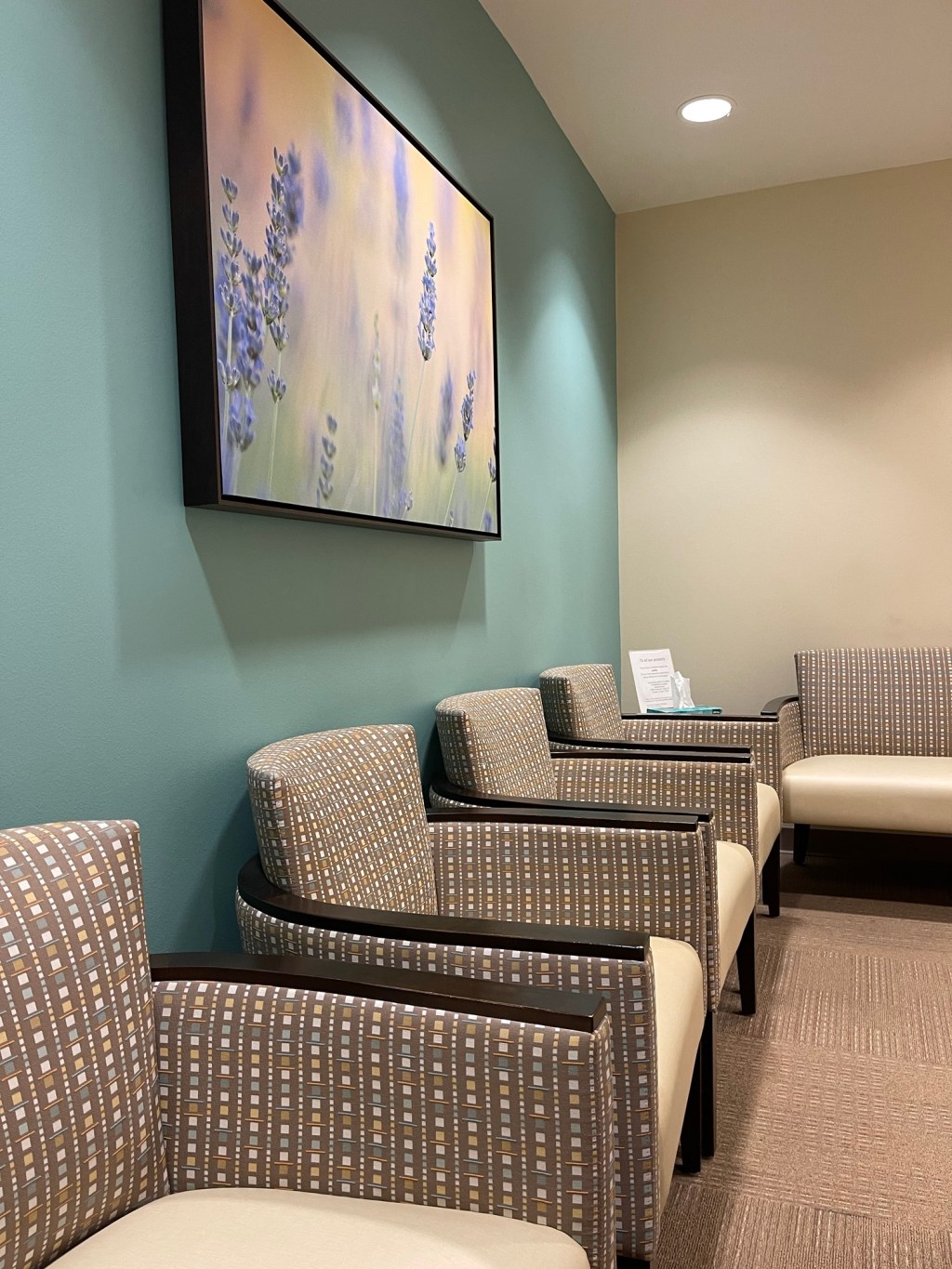
After waiting 10 days for an appointment, I finally arrived at the breast center. As I stepped through the threshold of the center, a wave of calm washed over me, marked by the words of encouragement and resilience that adorned the walls. Soft blue hues wrapped the suite, casting a gentle warmth that offered comfort in the face of the unknown. Upon checking in, I took a seat in the corner away from the opening. The lobby was very quiet, so I retreated to the familiar glow of my phone screen as I waited for my name to be called.
Soon, a staffer beckoned me forward, leading me through a maze of doors to a dressing area nestled away from public view. With a steadying breath, I shed my clothing from the waist up, surrendering to the vulnerability of the moment as I prepared for what lay ahead. I placed my belongings into a locker and waited in the dimly lit room. The quietude broken only by the occasional shuffle of footsteps and murmured conversations echoing in the distance. It was in this moment of solitude that the weight of anticipation settled upon my shoulders, a silent companion to the thoughts that raced through my mind.
As I waited for the technician to call my name, I found myself grappling with a kaleidoscope of emotions. With each passing second, the knot in my stomach tightened. It was a silent reminder of the reason for my visit. Yet amidst the uncertainty, there lingered a glimmer of hope—a quiet assurance that whatever the outcome, I would be fine.
No abnormal findings resulted from my diagnostic mammogram. I was then taken to another waiting room to have another view of my breast using ultrasound imaging. The technician used the probe of the ultrasound machine to examine both breasts, which revealed a benign (noncancerous) mass in the milk duct on the right side. The breast radiologist reviewed the images obtained from the ultrasound and ordered a bilateral MRI to determine the size and extent of the mass in case surgical removal was deemed necessary.
It took seven days to get on the schedule to have the breast MRI. It was mainly due to the order being written incorrectly. It read that I needed an MRI of the right breast instead of both. There was no way to complete one breast and not the other. At this facility, I was given a pink coverup and a fluffy white robe. A patient sitting next to me mentioned that this was like getting the spa experience. It was NOTHING like being at the spa. The machine was large, and I had to lay on my stomach with a metal bar separating my breasts. The nurse gave me earplugs and an IV was placed in my arm to inject the contrast into my body. I was instructed to remain still, and informed that the procedure would take about 30 mins. As the machine began to gather images, I could hear clicking, ticking and humming sounds. This was the perfect playlist to allow me to take a quick nap. When the procedure ended, I felt a little disoriented. It was due to the magnetic force within the machine. My IV was removed and the staff assisted me with climbing down from the machine. I received post procedure instructions to start hydrating immediately to flush the contrast from my body. The nurse gave me a bottle of water to drink, instructed me to change back into my clothes and discharged me from the facility.
As I waited days for the results of the MRI, I felt a mix of nerves and anticipation, typical of any medical appointment. When the news came, it was like a sudden storm on a clear day. The delivery of the news was cold and very impersonal. I received a letter in the mail informing me that something abnormal was spotted. There were additional suspicious findings at the left breast, opposite to the initial concern. Per the letter, further tests were needed to confirm the diagnosis of the suspicious findings. I then began to worry, but knew I had to remain calm. So, I stayed busy with life to keep from driving myself crazy with wonder.
The next step came five days later. It involved collecting biopsies of the suspicious areas from my left breast and left axilla (armpit or underarm). I had a total of four biopsy procedures—three under ultrasound guidance and one under MRI guidance. The biopsies, although uncomfortable, were necessary to obtain tissue samples for analysis. With each biopsy, a numbing medication, Lidocaine, was injected into the area. It burned and then the feeling went away after 10 seconds (I counted). With the MRI-guided biopsy, a core biopsy was performed inside of the suite, while on the machine. It involved having a biopsy needle inserted into the suspicious area and rotated 360 degrees to obtain a core sample of the tissue at the site. A coil clip (marker) was placed at the site of each biopsy. The coil clips remain inside my body so that the images of my breast and axilla will show which areas were biopsies previously. It took a span of two days to collect the required biopsies. All I could do next was await the results anxiously, acknowledging the uncertainty of the outcome, but choosing to remain hopeful.
 Practicing Medicine
Leave a comment