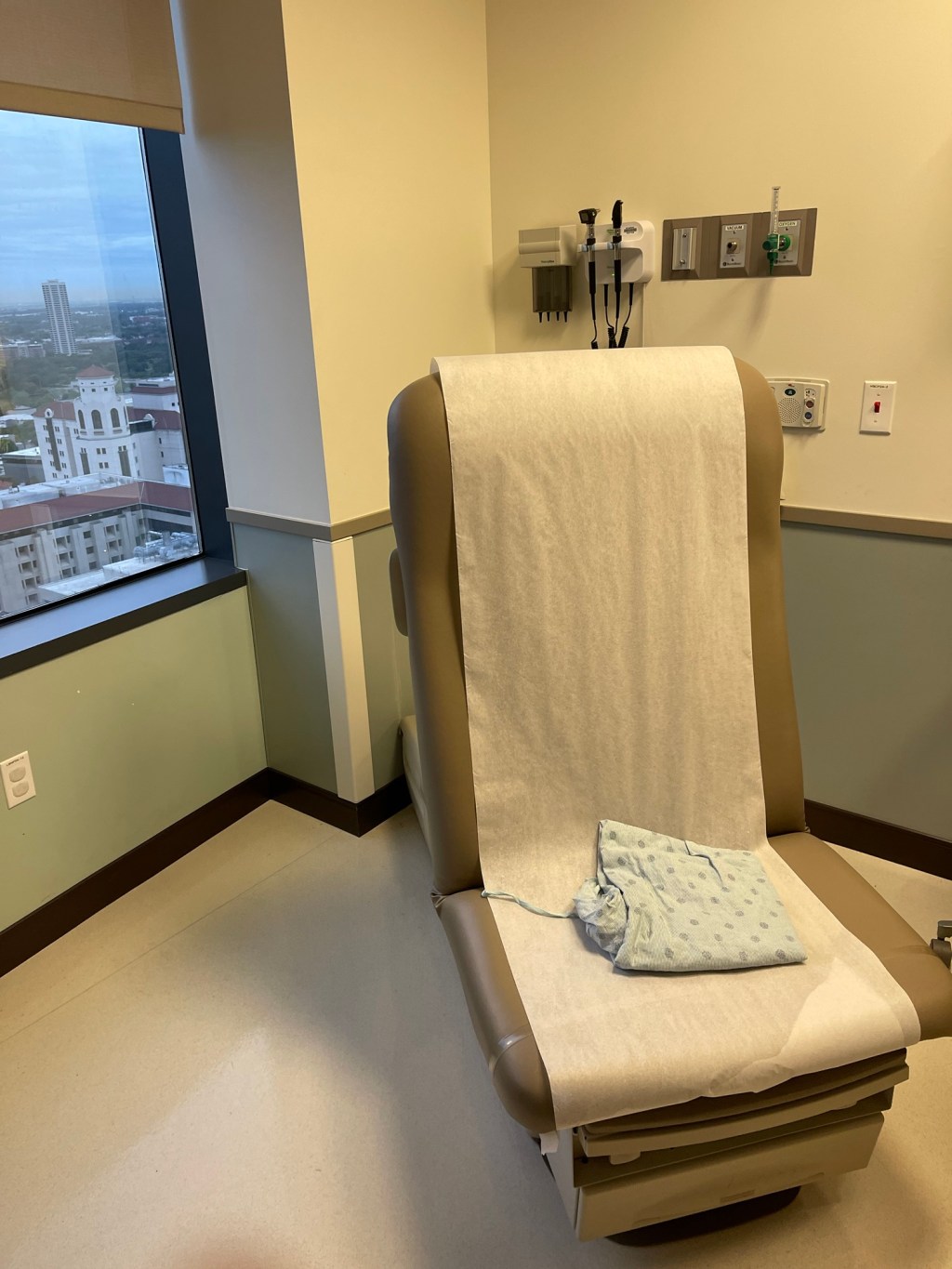
This was the day I meet my new oncologist. I tried to arrive with an open mind, ready to receive any and all information that would be given. She was the one person that could provide me with the answers that I needed. I knew that it would be a ton of information, so my husband accompanied me to this appointment. He would be the second set of listening ears. I knew that he would ask questions that I might have forgotten to inquire about or catch something that I failed to retain.
The appointment started with my oncologist meticulously examining my left breast and the lymph nodes under my left arm. During this physical exam, I felt a profound sense of vulnerability wash over me. Gone was the veil of modesty that once shielded me from prying eyes. It was quickly replaced by a raw openness born out of necessity. In that moment, all that mattered was the prospect of finding a glimmer of hope while working towards healing and restoration.
In the reassuring presence of my oncologist, I felt an aura of calm. With a gentle yet candid demeanor, she sat on the chair in front of me to explain the details of my diagnosis, shedding light on the reality of my condition. It was more serious than I anticipated, as if I could imagine anything worse than the initial news I had to accept. I learned that I was facing one of the most aggressive forms of breast cancer. It was classified as grade three out of three, in terms of aggressiveness on the breast cancer grading system.
The breast cancer grading system is used to classify the aggressiveness of the cancer cells based on their appearance and behavior under a microscope. This grading system helps oncologists determine the best course of treatment and prognosis for patients battling this type of cancer. The grades are assigned on a scale of one to three, with grade three being the most aggressive. Grade one tumors are typically slow-growing and less likely to spread, while grade three tumors are characterized by rapidly dividing cells that are more likely to metastasize to other parts of the body. This information drew a shadow over the room as we delved into my treatment plan.
The treatment plan laid out before me was daunting in its scope and intensity. Six rounds of chemotherapy would precede surgery, followed by radiation and additional rounds of chemotherapy. The realization that this journey would span the better part of a year came as a desolate revelation. This information was scary and unreal to me. It challenged me to summon reserves of courage and resilience I never knew I possessed. While trying to ingest this information, my oncologist also provided me with information about an investigational clinical trial.
The possibility of participating in this trial offered a ray of hope. When hearing about a clinical trial, I automatically thought of rodents in a laboratory. I did not want to be part of an experiment, nor did I want to cause more damage to my body by looking for alternative methods. The oncologist explained that the clinical trial consisted of targeted therapies with potentially fewer side effects than traditional chemotherapy. All of my hair wouldn’t fall out and I would not have my immunity compromised. I was told that this was a great opportunity and many others before me had great results on this trial. Before I could react to this information, she informed me that there was only one spot left on the trial and another woman was being tested for the spot. So many thoughts ran through my head. If I decided to be on the trial, would I be evil for hoping that the other person wasn’t a match so that I could have a chance? I would not wish any ill will on anyone. The decision weighed heavily on my mind, compiled with the weight of uncertainty and the fear of the unknown. As I debated with this pivotal decision, I found comfort knowing that I had time to deliberate before forging ahead.
With a heavy heart and a mind filled with reservations, I left the oncologist’s office, knowing that the road ahead would be filled with challenges. As I walked out the office, the clinical assistant asked that I complete initial blood work to establish a base line and pick up a prescription for blood pressure medication from my preferred pharmacy. The oncologist ordered me to take blood pressure medication to protect my kidneys and lower my blood pressure prior to starting any treatment regimen. Before this diagnosis, I had not taken anything more than allergy medication and was considered very healthy. I was told that my blood pressure was higher than recommended guidelines for starting chemotherapy. I truly believed that the stress of all of this was causing my blood pressure to rise. These last eight days had been very stressful! In an attempt to be a compliant patient, I agreed to pick up the medication and start taking it. Every medication comes with its own set of risks, but I hoped that the benefits would be greater. The diagnosis, the treatment plan and now new daily medication…….It seemed that every new discovery on this journey, pushed me further away from the normalcy that I used to take for granted.
 Practicing Medicine
Leave a comment