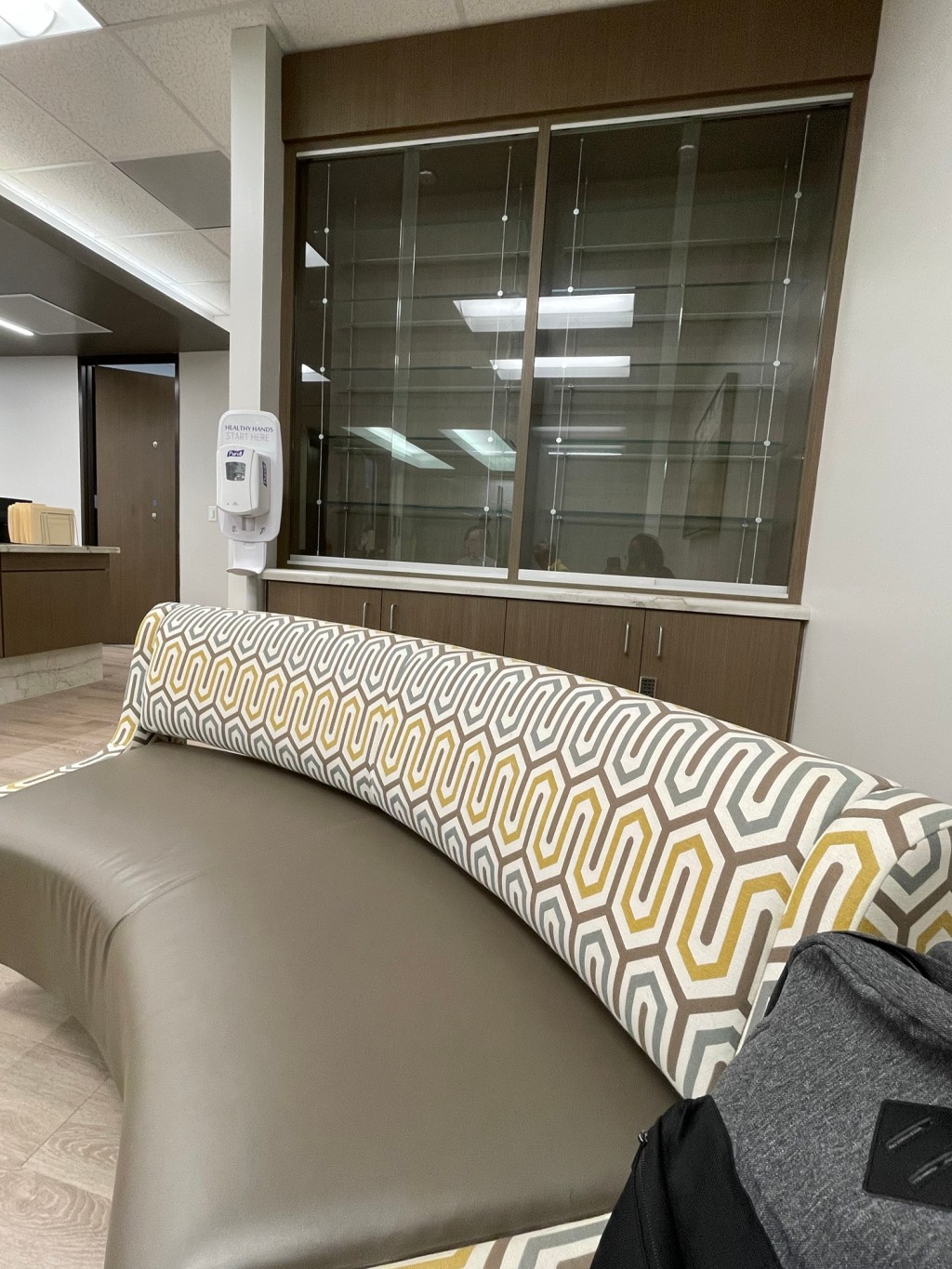
I was scheduled to meet my breast surgeon on this day. As I entered the Department of Surgery office suite, I checked in with the staff and took a seat in the lobby to await my turn. I arrived alone to this appointment, but as I panned the lobby, my husband entered the suite. He had come to accompany me. He inquired about my day and I replied with an appropriate but generic answer. It was the end of the day and I was just ready to mark this task off my list. The lobby contained only a few other patients. One person was alone and the other had a companion. As I sat there, I pondered the reason for their visits. Were they also facing a similar fate?
About seven minutes later, my name was called. The office assistant greeted and escorted me to a patient room. I undressed from the waist up as I had done at my oncologist appointment and covered myself with a gown open to the front. The surgeon walked into the room to start the consultation. Her calm demeanor, knowledge and personable bedside manner immediately put me at ease. An advanced practice provider (nurse practitioner) accompanied her to my room to obtain a history from me, record my vital signs (blood pressure, heart rate and temperature) and assist with my physical exam.
While there, I learned that I had options when it came to addressing my breast cancer: a full mastectomy or a lumpectomy. The choice was mine to make, however, each option carried its own set of considerations and implications. A mastectomy would entail the complete removal of the affected breast, while a lumpectomy would involve removing the tumor and surrounding tissue, preserving as much of the breast as possible. Additionally, lymph node removal was necessary due to the cancer’s metastasis, a reality that further underscored the gravity of my diagnosis.
Despite the weight of these decisions, the surgeon reassured me that I had time to decide and we would discuss further. For now, our focus shifted to the immediate steps ahead: preparing for chemotherapy. As part of this process, I needed to have a port-a-catheter installed, a procedure that would facilitate the administration of chemotherapy drugs directly into my bloodstream. The surgeon outlined the procedure and explained that it would be performed in interventional radiology, ensuring minimal discomfort and a swift recovery.
Amid the practicalities of treatment, a moment of levity emerged as my husband expressed concern about encountering former colleagues during the procedure. The surgeon mentioned that her schedule was full. With a smile, I joked about the potential revelation of my true age. I told her that I had been 28yrs old for the last few years and that going to that department for a procedure would confirm that I was not. This elicited laughter from the surgeon and she replied that we couldn’t allow that discovery to happen. She asked her assistant to place me as her last case for the day. Her warmth and understanding eased my apprehensions, reaffirming my confidence in her expertise and dedication to my care.
Before scheduling the port-a-catheter insertion, the surgeon emphasized the importance of completing necessary diagnostic tests to ensure my safety during the procedure. The office assistant arranged for the tests to be completed promptly, setting the stage for the next phase of my journey. As I left the surgical suite, a sense of determination mingled with gratitude, knowing that I was in capable hands and that this step brought me closer to reclaiming my health and vitality.
 Practicing Medicine
Leave a comment