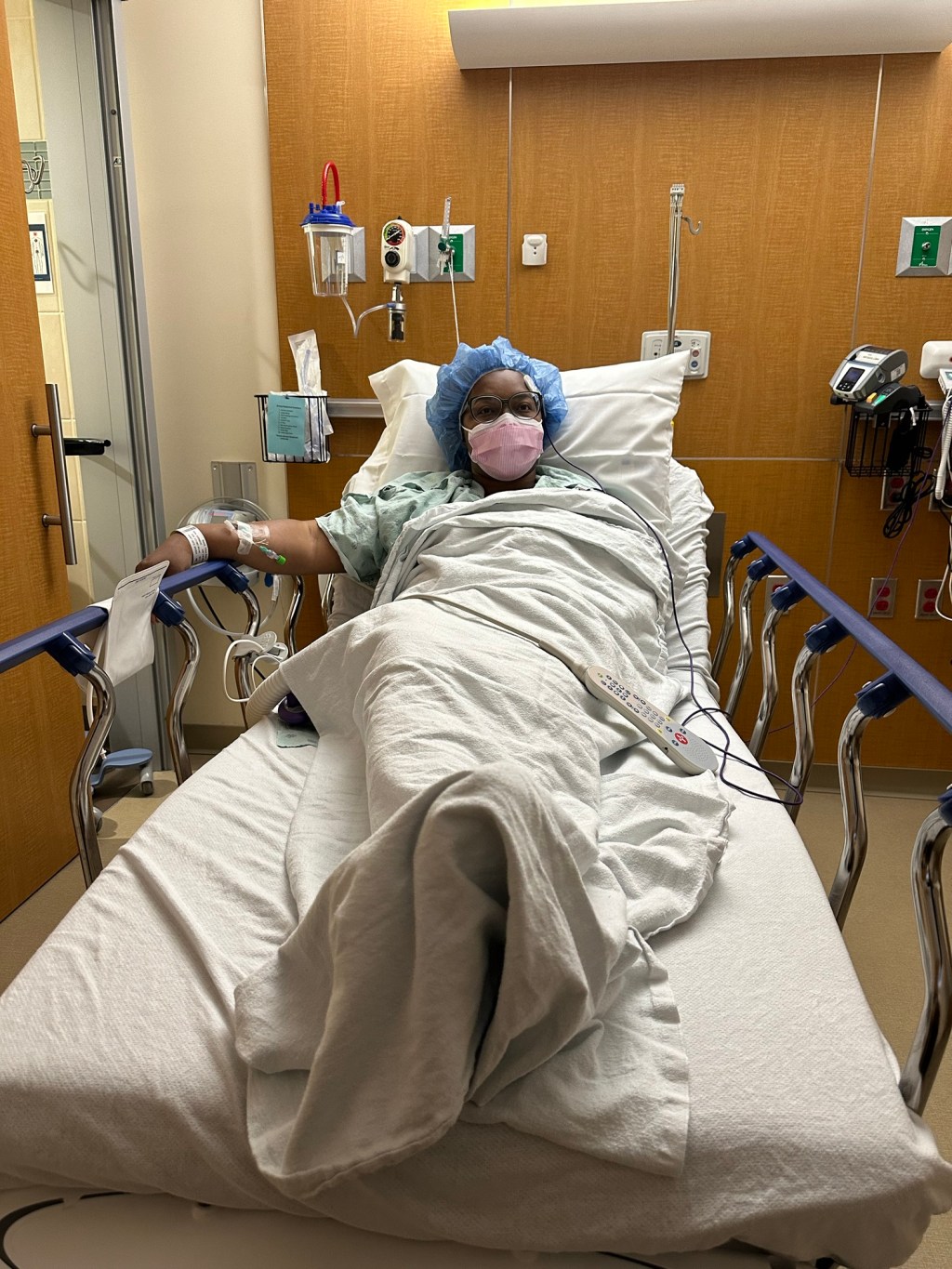
The past few days had been very difficult. The medication that was administered during the procedure and post-op stay of a few hours, was still in my system to date. I’ve always had a sensitivity to sedation and pain medication, but this seemed to last longer than anticipated. For the procedure, a cocktail of medications was introduced into my system, each serving a distinct purpose. I received:
• ceFAZolin (ANCEF)
• famotidine (PEPCID)
• MIDAZolam (PF) (VERSED)
• ondansetron (ZOFRAN)
• lidocaine (PF) (XYLOCAINE)
• propofol (DIPRIVAN)
• dexAMETHasone (DECADRON)
• fentaNYL (SUBLIMAZE)
• norEPInephrine (LEVOPHED)
The antibiotic, cefazolin, was administered to preemptively ward off any potential infections, while other medications like midazolam and propofol worked to induce sedation. Norepinephrine helped maintain my blood pressure levels. Additionally, pain management medications like fentanyl were on standby to ensure my comfort throughout the procedure. All medications were administered within one hour. Despite the swift administration of these medications, their collective influence left me feeling heavily sedated and struggling to maintain clarity of thought.
I was intubated during the procedure. A device called a laryngeal mask airway (LMA) was used for the intubation. It played a vital role in ensuring my airway was open while I was under anesthesia. This contributed to the overall success and safety of the procedure.
After the procedure, I woke up in PACU (post-anesthesia care unit). I was very groggy and could not keep my eyes open. I recall the radiology team coming to my beside to take an x-ray of the port-a-catheter, to check its placement. I remember them pulling me forward using the bed sheet to allow the x-ray cartridge to sit behind me. They were so rough. It felt like the cartridge damaged my shoulder blade as they positioned into in place, which caused me to grimace. The nurse noticed my grimace and asked me if I was in pain. I replied “yes” and received 50mcg of Fentanyl. Unfortunately, after 30 mins or so I still had pain. During this stage of recovery, the patient’s pain must be reported as less than a certain number. Now I do not recall providing a number, because I was very groggy. The nurse then stated that he was going to give me something to last longer so that I could progress to the secondary recovery area. The PACU nurse then gave me a 1 mg dose of diluadid. I felt like I couldn’t recover mentally because I was getting slammed with pain medications.
I was transitioned to the secondary recovery area by stretcher. I remember telling the nurse that the lights on the ceiling were making me nauseous. He yelled for me to close my eyes and I couldn’t do anything but comply. I could hardly open my eyes, but my hearing was intact. Once I reached the room, the nurse brought my sister to the room to assist me. I recall the nurse stating “I’m not sure why they gave you so much medication when you are scheduled to go home.” He mentioned this because I needed to use the restroom as a criteria item to be discharged home from the facility. This proved to be harder than I anticipated.
First, my sister assisted me with sitting on the side of the bed and then to the restroom. The fluid that was going into my IV catheter was infusing at a rate of approximately 30mLs per hour. To place this in context, I received one ounce per hour. This did nothing to help dilute nor flush the medications out of my system, so I opened the regulator of the tubing to free flow into my IV. I also asked the nurse for a dose of Zofran. I wanted the nausea to go away. Once the anti-nausea medication and fluids flowed into my system, I could then communicate using full sentences. I was able to void, get dressed and finally be discharged home.
 Practicing Medicine
Leave a comment