The past few weeks have been filled with medical appointments, documenting blood pressure readings, and constant movement. I was “running” to complete tasks for myself or something underneath one of my many hats. I was asked how I physically felt since beginning treatment. Well, I truly don’t know. I still haven’t stopped long enough to process everything that is occurring. My steps are being ordered by tasks. I’m sure that everything will hit me suddenly. When I least expect it.
I have been following this new medication regimen since leaving the PCP’s office. To ensure the accuracy of my readings, I had been diligently recording my blood pressures upon waking and at 9pm each day. My PCP noted the improvement and commended my efforts in managing the condition. He advised that I continue to record the readings through the next week. This progress feels like a small victory in the larger battle for my health.
In preparation for my next infusion, I completed a series of lab tests. These tests are crucial for determining how my body is responding to treatment and ensuring that I am in the best possible condition for the upcoming infusion. I made it a point to review my lab results before the net scheduled infusion. Understanding these results not only empowers me to ask informed questions but also helps me feel more in control of my health journey.
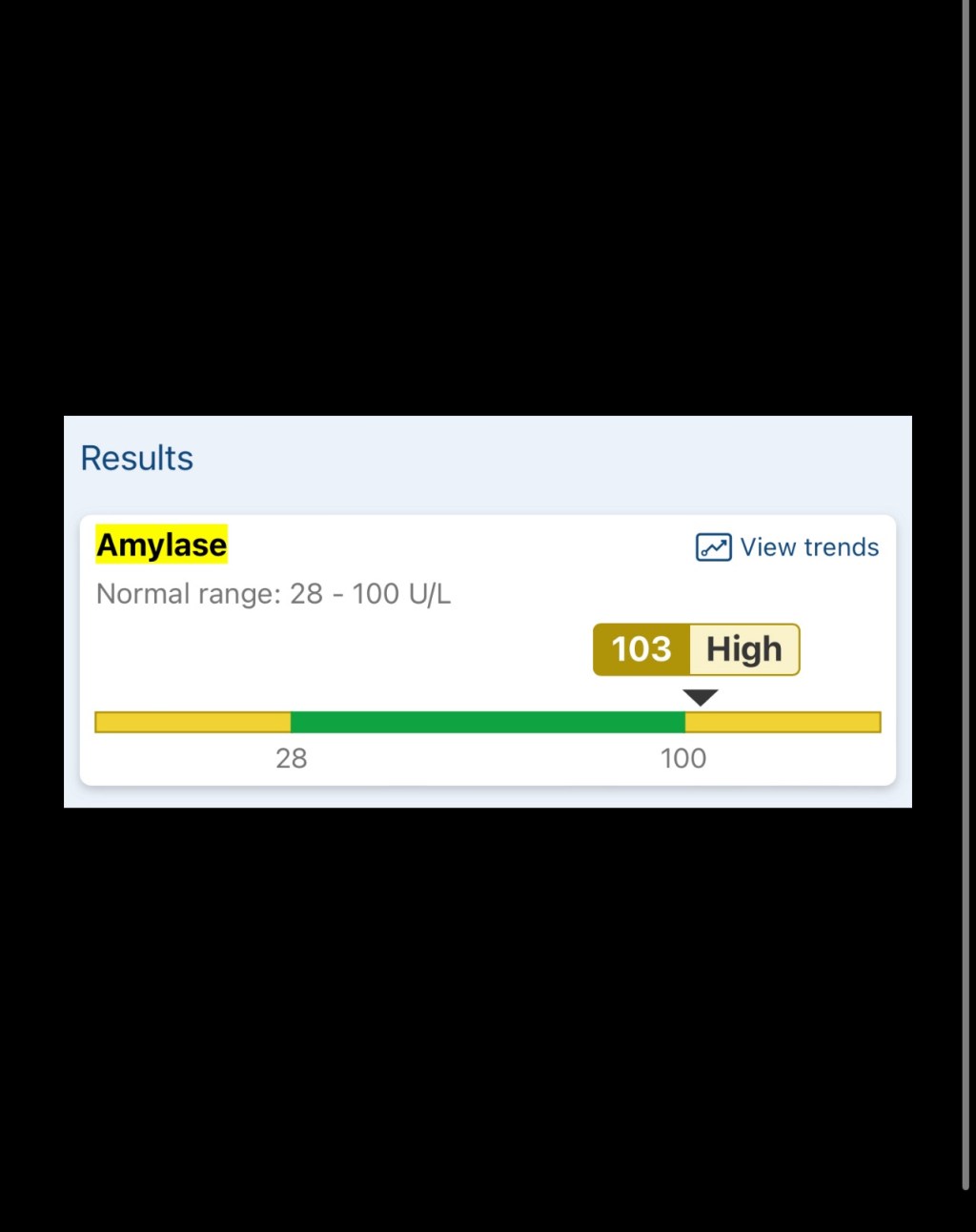
When the lab results came in, I took the time to go through each one carefully. I was able to note the key markers and any areas that seemed out of range. I noticed that some of my lab values were abnormal. One that stood out was the amylase level. The normal range is 28-100 units per liter (U/L). This level jumped from 69 U/L to 103 U/L. Amylase is an enzyme produced primarily by the pancreas and the salivary glands, and it plays a crucial role in the digestion of carbohydrates. The range of amylase levels in your blood can provide valuable information about your pancreatic health and potential underlying conditions. Here’s what the amylase range can indicate:
- Pancreatitis: One of the most common reasons for a significant increase in amylase levels is acute pancreatitis, which is the inflammation of the pancreas. In this condition, amylase levels can be several times higher than the upper limit of normal.
- Chronic Pancreatitis: Chronic pancreatitis can also cause elevated amylase levels, though they might not be as high as in acute pancreatitis.
- Pancreatic Cancer: Elevated levels can sometimes indicate pancreatic cancer.
- Other Conditions: Other conditions that can cause increased amylase levels include gallbladder disease, peptic ulcers, and intestinal blockage.
Knowing this information allowed me to compile a list of questions to discuss with my oncologist. Was I developing one of the aforementioned disorders? Will the treatment regimen eventually lead to these disorders? Could this have been prevented? What are my next steps? Questions jumped around in my head as I tried to process this information.
I believe that being well-informed is essential, especially when navigating complex treatments and health challenges. For now, I would just hold my questions for my next visit with my oncologist in a couple days.
 Practicing Medicine
Leave a comment