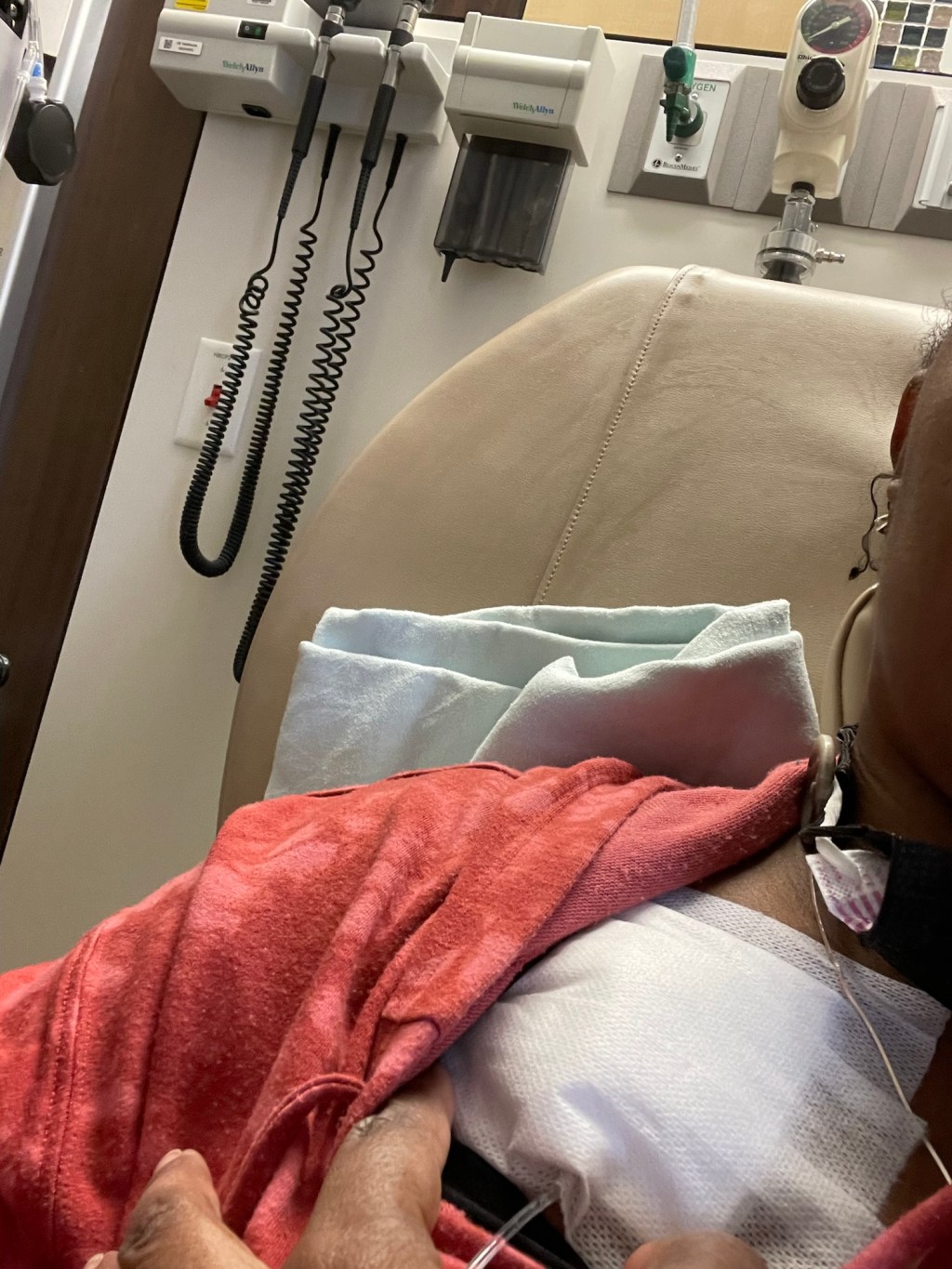
Treatment days have a rhythm of their own—a mix of routine and unpredictability that can turn even the most composed person into a bundle of nerves. This particular treatment day started like any other: checking in, verifying my details, and settling into the infusion chair. I had my usual essentials—my thermal blanket, snacks, and a book to distract me. But this time, the routine took an unexpected turn.
Midway through my infusion, the nurse came over with a concerned expression. “Your heart rate is higher than normal,” she said. I glanced at the monitor and saw the elevated heart rate. My pulse was racing as if I’d just run a marathon, but I was sitting still. The nurse explained that they needed to pause my infusion to do an EKG.
The room felt smaller as they wheeled over the portable EKG machine. Sticky electrodes were placed on my chest, and the machine started to hum, capturing my heart’s rhythm. I stared at the ceiling, trying to calm myself with deep breaths. But how do you stay calm when the organ responsible for keeping you alive is throwing a tantrum?
After what felt like an eternity, the nurse reassured me that the EKG didn’t show anything alarming. “We’ll keep monitoring you,” she said. Despite her comforting tone, my anxiety had already taken root. I silently wondered: Is my heart struggling under the weight of treatment? Is this the new normal?
As the infusion resumed and the beeping monitors faded into the background, I decided to check my phone to distract myself. That’s when I saw the text—an abrupt and emotional message from a friend of nearly 20 years. The friendship wasn’t just fraying; it was unraveling, and I hadn’t even seen it coming.
In her message, she expressed frustration over what she perceived as me ignoring her. What she didn’t know—what I hadn’t shared—was that my silence wasn’t intentional. I had been dealing with this exact moment, with electrodes on my chest and a nurse watching my heart rate like a hawk.
I sat there, absorbing the weight of her words. It wasn’t anger I felt—it was heartbreak. This was someone who had seen me through so many of life’s milestones, and yet, she couldn’t see me now, in my most vulnerable state. I pride myself on being consistent and reliable, the same person no matter what’s happening in my life. But the truth is, cancer changes everything. It shifts priorities, drains energy, and makes even simple acts—like replying to a text—feel monumental.
As the hours of treatment dragged on, I replayed the message in my mind, wondering if I could’ve done something differently. But a part of me knew that no explanation could fully capture the complexity of what I was going through.
By the time the treatment ended, I felt emotionally and physically drained. My heart rate had stabilized, but my mind was puzzled. I left the treatment center, walking out into the fresh air with a bittersweet resolve.
Cancer teaches you a lot about resilience, but it also forces you to confront what truly matters. As much as I mourn the loss of a 20-year friendship, I must focus on preserving my health and energy for the battles ahead. I’m learning to let go of what I can’t control and hold onto what keeps me moving forward.
Some days, the hardest battles aren’t fought in treatment chairs but in the quiet corners of our hearts. And on those days, the best we can do is breathe deeply, trust the process, and keep moving forward—one beat at a time.
 Practicing Medicine
Leave a comment