Today marked another pivotal moment in my breast cancer journey as I received the results from my MRI core biopsy. The news, however, was far from reassuring. A lymph node at my left axilla tested positive for cancer. In medical terms, this meant that the cancer had metastasized, spreading from its origin in the breast to the nearby lymph nodes. With this development, my diagnosis shifted from stage one to stage two breast cancer, compounded by the presence of human epidermal growth factor receptor 2 (HER2), estrogen-negative and progesterone-negative cancer cells.
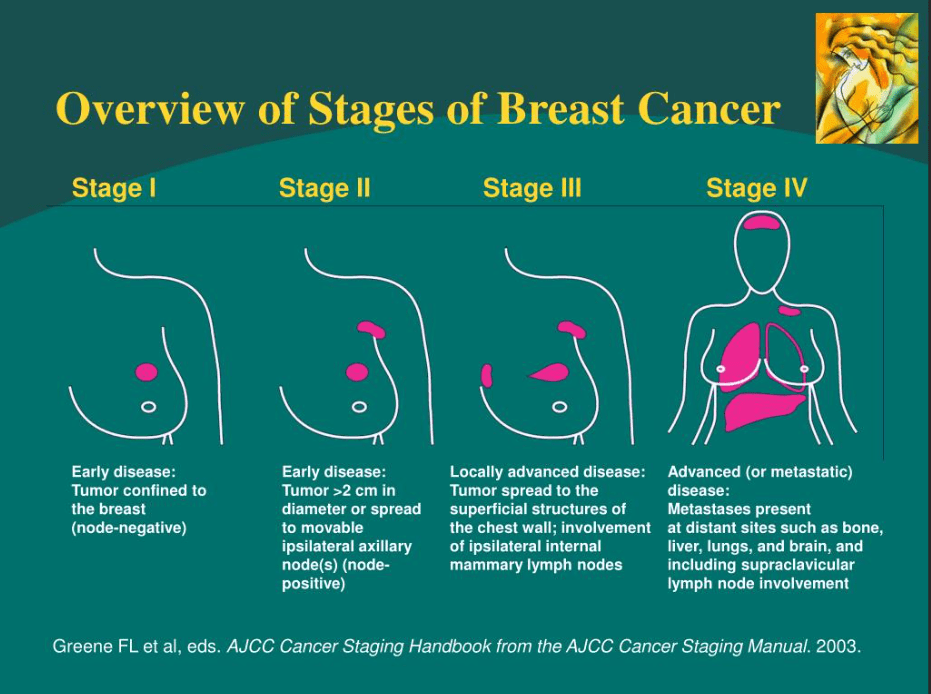
Breast cancer staging is typically classified using the TNM (Tumor, Nodes, and Metastasis) system. This system categorizes breast cancer into stages based on the size of the tumor, whether it has spread to nearby lymph nodes, and whether it has metastasized (spread) to distant parts of the body. Each stage indicates the extent of cancer progression and guides treatment decisions. The main stages of breast cancer are as follows:
- Stage 0: This stage is known as ductal carcinoma in situ (DCIS). At this stage, abnormal cells are found in the lining of a breast duct but have not invaded nearby tissue or spread outside the duct.
- Stage I: At this stage, the cancer is invasive but relatively small and has not spread beyond the breast.
- Stage II: Cancer that may have spread to nearby lymph nodes.
- Stage III: Locally advanced cancer that has spread extensively in the breast and nearby lymph nodes.
- Stage IV: Metastatic cancer that has spread to distant organs.
Navigating this pathway of medical jargon and prognostic implications was daunting, to say the least. In the wake of this disheartening news, I found myself falling into that familiar hole of unanswered questions and unspoken fears. What would the treatment plan entail? Could I still be there for my family, to witness my children grow? Was there hope for a future beyond the shadow of this relentless disease? The uncertainty gnawed at my insides. It was a constant reminder of the fragility of life and the unpredictability of the road ahead.
Throughout all of this, one thing became abundantly clear: I needed to take charge of my care and seek out the expertise of specialists who could guide me through this uncertain terrain. Following the recommendation of my gynecologist, I contacted a breast surgeon who stressed the importance of involving an oncologist in my treatment plan. After reaching out to an oncology office, I secured an appointment with a provider. Upon learning that the provider was relatively new but had trained under a seasoned oncologist, I couldn’t help but question whether I should opt for the student over the teacher. It felt akin to having Chris Brown teach me how to moonwalk – while Chris is undoubtedly talented, having Michael Jackson himself show me the steps would be unparalleled. Nonetheless, I reached out to schedule an appointment with the seasoned oncologist but was informed that she was not taking any new patients. So, I figured I would just continue with my initial appointment with the newer physician. Within hours of scheduling the appointment, I received communication that the seasoned oncologist had agreed to take on my case. This offered a glimmer of hope amidst the darkness that covered my world within the last few days.
Despite the overwhelming uncertainty that loomed on the horizon, I made a conscious decision to remain steadfast in my resolve and maintain a sense of purpose amidst the chaos. Continuing to take proactive steps, I contacted my health insurance provider to inquire about intermittent FMLA (Family and Medical Leave Act), recognizing the importance of ensuring job security and financial stability during this time. I also inquired about the deductibles associated with receiving treatment for the disease. Unfortunately, the health insurance provider was not able to offer any specific information regarding treatment costs and requirements, citing the variability of each treatment plan and its associated expenses. Ultimately, the details of my treatment regimen would be determined by the specific drug treatment regimen prescribed by my provider, tailored to my unique diagnosis.
Despite juggling with the diagnosis and treatment logistics, one decision weighed heavily on my heart: when and how to share this devastating news with my family. The thought of witnessing their sorrow and worry was almost unbearable, yet I knew that their unwavering support would be my greatest source of strength in the days to come. As I navigated this delicate balance between vulnerability and resilience, I clung to the hope that clarity and answers would eventually emerge from the murky depths of uncertainty.


Leave a Reply